

 Jun, 7 2026
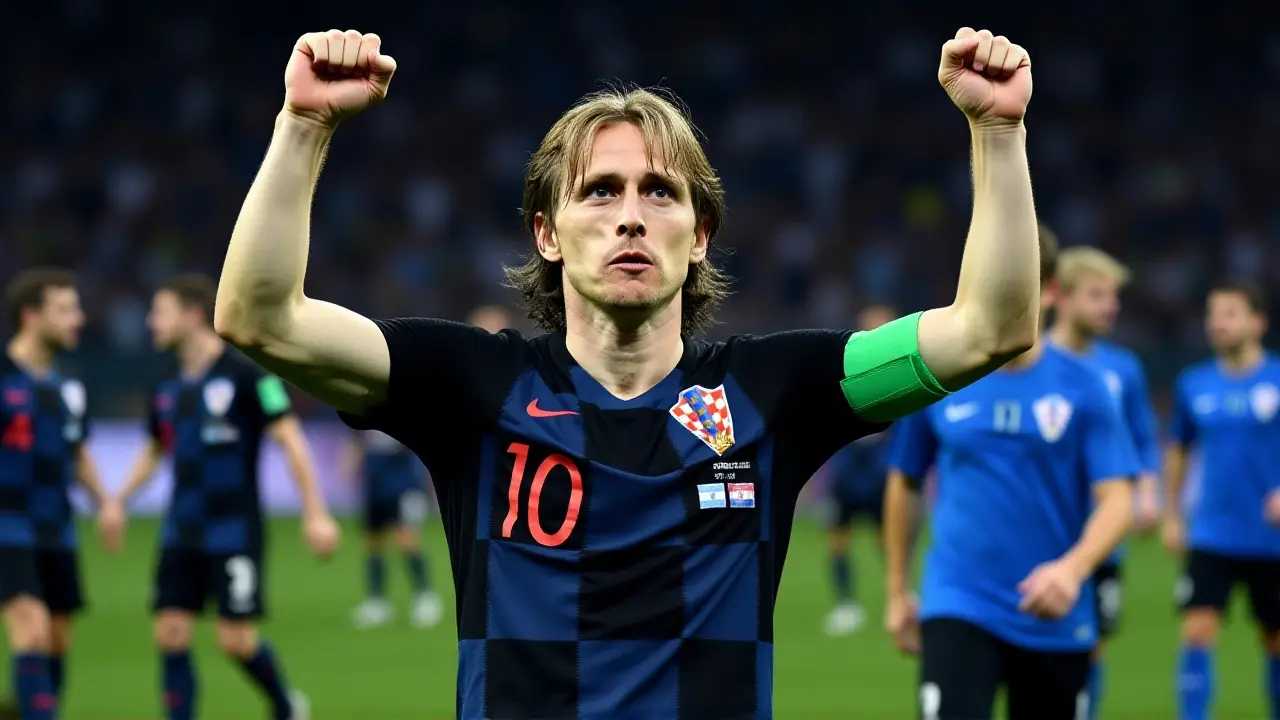
The countdown to the biggest show on earth has officially begun, and the pre-tournament friendlies are already delivering drama. On Tuesday, June 2, Croatia suffered a sobering 0-2 defeat to Belgium in what was supposed to be a routine tune-up. It’s a result that sends shivers down the spine of any fan expecting an easy ride into the tournament.
This match wasn’t isolated; it was part of a frantic week of warm-ups across the globe leading up to the FIFA World Cup 2026Mexico City, which kicks off on June 11 with Mexico hosting South Africa. Every qualified nation is hitting the pitch right up until the day before the opener, trying to find form, test tactics, or simply shake off the rust.
A Week of Surprises and Statement Wins
Here’s the thing about friendlies: they’re unpredictable. While Croatia stumbled, other teams were making bold statements. On that same Tuesday, Colombia crushed Costa Rica 3-1, and Morocco put on a defensive masterclass, shutting out Madagascar 4-0. Canada also looked sharp, beating Uzbekistan 2-0.
But the real shockwaves came earlier in the week. Look at Sunday, May 31. Brazil, always expected to dominate, didn’t just win—they annihilated Panama 6-2. Meanwhile, Germany showed their attacking prowess by dismantling Finland 4-0. Even the United States, playing as co-hosts, had to work for their points, edging Senegal 3-2 in a tight contest.
Then there’s the Netherlands. In a result that caught everyone off guard, they faced Algeria in Rotterdam. Reports later described it as a "shock defeat," proving that even traditional powerhouses can get caught napping when the stakes aren't fully official yet. These results matter because they reveal vulnerabilities before the pressure cooker of the World Cup turns on.
The Schedule: Where to Watch and What’s Next
If you’re trying to keep track, the schedule is dense. Kick-off times are listed in British Summer Time, so don’t lose sleep over early morning games unless you’re in Europe. The action spans continents, from Fort Lauderdale to Liege, and from Sandy, Utah, to Coruna.
For those who missed the recent action, here’s a quick look at some key upcoming fixtures that will shape the final weeks of preparation:
- Wednesday, June 3: Haiti vs New Zealand (Fort Lauderdale) and Congo DR vs Denmark (Liege).
- Thursday, June 4: Spain vs Iraq (Coruna) and France vs Ivory Coast (Nantes), both available on Amazon Prime PPV.
- Saturday, June 6: A massive day featuring USA vs Germany in Chicago (Premier Sports), England vs New Zealand in Tampa (ITV), and Portugal vs Chile in Lisbon.
- Sunday, June 7: Argentina faces Honduras in Texas, while Croatia gets another chance to redeem themselves against Slovenia in Varazdin.
Broadcasters like Amazon Prime Video, BBC, and ITV are splitting the coverage, meaning fans might need multiple subscriptions to catch every game. It’s a fragmented landscape, but the quality of football is worth the hassle.
Expert Analysis: Reading Between the Lines
So, what do these results actually tell us? Experts are already crunching numbers. ESPN’s models give Spain a 48% chance of reaching the semifinals, compared to just 7% for the United States. That’s a stark contrast, especially since this U.S. team is hailed as the best they’ve fielded since 1994.
Turns out, the group stages could be brutal. One prediction model suggests Group G—featuring Belgium, Egypt, Iran, and New Zealand—will see Belgium top the table, with Egypt second. If Belgium’s performance against Croatia holds up, that prediction looks solid. But football is rarely that linear. The "why this matters" angle here is psychological. Teams like Croatia, coming off a loss, need to bounce back quickly against Slovenia to avoid carrying doubt into the tournament.
Meanwhile, Brazil’s 6-2 win over Panama shows their attack is lethal, but their defense might still have holes to plug. These friendlies are diagnostic tools. Coaches are looking for red flags, not just scorelines.
What’s Next?
The final wave of warm-ups hits on Wednesday, June 10. Key matchups include Saudi Arabia vs Senegal in San Antonio and England vs Costa Rica in Orlando. After that, silence. No more friendlies. Just the World Cup.
The stage is set. The teams are tested. The nerves are fraying. All eyes now turn to Mexico City for the opening whistle. Will the favorites deliver, or will the underdogs spring more shocks? Only time—and ninety minutes of intense football—will tell.
Frequently Asked Questions
When does the FIFA World Cup 2026 start?
The tournament begins on June 11, 2026. The opening match features Mexico hosting South Africa in Mexico City. This date marks the end of the intensive warm-up period where all qualified nations play final friendly fixtures.
How did Croatia perform in their last warm-up match?
Croatia lost 0-2 to Belgium on Tuesday, June 2. This result was concerning for the European side, but they have another opportunity to adjust their tactics against Slovenia in Varazdin on Sunday, June 7, before the tournament begins.
Where can I watch the warm-up matches?
Coverage is split across several platforms depending on your region. In the UK, BBC and ITV are broadcasting select high-profile games. Globally, Amazon Prime Video is streaming many fixtures, including matches involving Spain, France, and Australia. Check local listings for specific kick-off times in your timezone.
Which teams had the most surprising results?
The Netherlands' defeat to Algeria was labeled a "shock" by analysts, highlighting potential weaknesses. Conversely, Brazil’s 6-2 demolition of Panama and Germany’s 4-0 win over Finland were dominant performances that exceeded expectations for these powerhouse teams.
Is there a full list of all warm-up scores available?
Yes, outlets like Football365 and the official FIFA website provide comprehensive lists of every warm-up fixture, including detailed scorers and key events. These resources update daily as matches conclude through June 10.
Mike Gill
June 9, 2026 AT 15:29honestly i dont get the hype around these friendlies at all, they are just meaningless warmups and the scorelines mean absolutely nothing in the grand scheme of things
Pooja Kiran
June 10, 2026 AT 09:01Oh, please. The sheer ignorance is palpable here. You claim friendlies are meaningless? How quaint.
Let me educate you on the concept of tactical calibration during the pre-tournament phase. Belgium’s victory over Croatia wasn't merely a scoreline; it was a diagnostic exercise revealing Croatia's defensive frailties against high-pressing systems. Meanwhile, Brazil’s annihilation of Panama serves as a barometer for their attacking fluidity, albeit highlighting defensive porousness that requires immediate rectification by coach Dorival Júnior.
The Netherlands’ shock defeat to Algeria is not an anomaly but a statistical probability when squad rotation exceeds optimal thresholds. These matches provide crucial data points for xG (expected goals) models and possession metrics. To dismiss them as 'meaningless' is to ignore the intricate web of sports science and psychological conditioning that precedes the World Cup. The fragmentation of broadcast rights across Amazon Prime, BBC, and ITV further complicates the viewing experience, necessitating a multi-platform subscription strategy for comprehensive analysis. It is intellectually lazy to reduce such complex preparations to mere 'warmups'. The psychological impact of a loss like Croatia’s cannot be understated, especially with Slovenia looming. One must appreciate the nuance.
Shreyanshu Singh
June 10, 2026 AT 20:45bro u guys are stressing way too hard about friendly games lol its just football before the real thing starts why does everyone care so much about who beat who in june
Gaurav sharma
June 12, 2026 AT 20:10You're clearly missing the bigger picture, my friend. This isn't just about scores; it's about exposing the rot beneath the surface. Croatia’s loss to Belgium is a glaring indictment of their current form, suggesting a lack of cohesion that will haunt them in Mexico City. And let’s not pretend Brazil’s defense is watertight after leaking two goals to Panama.
I find it fascinating how fans cling to hope despite the evidence. The Netherlands getting beaten by Algeria shows that even giants can stumble when complacency sets in. It’s toxic to ignore these warning signs. The media loves to spin narratives, but the truth is stark: teams are vulnerable. If you’re still treating this as a joke, you’re part of the problem. Wake up.
diksha gupta
June 14, 2026 AT 11:07i think we should all just relax and enjoy the journey rather than dissecting every single pass or tactical error because football is supposed to bring people together not divide us with endless criticism and negativity
Megha Khairnar
June 15, 2026 AT 11:37There is wisdom in your words, yet I feel compelled to add another layer to this conversation. Football is indeed a unifying force, transcending borders and cultures. However, the tension generated by these warm-up matches is also a form of engagement, a shared anticipation that binds us.
When Belgium beats Croatia, it’s not just a win; it’s a narrative shift. When Brazil thrashes Panama, it’s a display of power that inspires awe. We are not just watching players; we are witnessing the culmination of years of training, sacrifice, and national pride. The upcoming fixtures, like USA vs Germany, promise more than just entertainment-they offer a glimpse into the future of the sport. Let us embrace both the joy and the critique, for they are two sides of the same coin. Peace and passion can coexist.
Twinkle Vijaywargiya
June 16, 2026 AT 13:59I completely agree with the sentiment here! It is truly wonderful to see how diverse perspectives can enrich our understanding of the game. Perhaps we can all come together to celebrate the beauty of football, regardless of the outcomes. After all, the spirit of the tournament lies in unity and mutual respect among fans worldwide. Let us support our teams with grace and enthusiasm!
Navya Anish
June 18, 2026 AT 08:19Ugh, typical naive optimism. You think everything is fine? Look at the facts! Our team is struggling, and instead of addressing the real issues, you want to 'enjoy the journey'? Disgraceful. We need accountability, not empty platitudes about unity. The world cup is coming, and if we don’t step up now, we’ll have no one to blame but ourselves for the failures ahead. Stop being so passive and demand better from our players and coaches!
Subramanian Raman
June 20, 2026 AT 03:57I hear your frustration, and it’s valid. But perhaps anger won’t solve the problems. Maybe we need to listen more and judge less. What do you think is the core issue here? Is it tactics, morale, or something deeper? Let’s explore this together with empathy and open minds. :)
Prashant Sharma
June 22, 2026 AT 03:53One might argue that the entire premise of 'friendlies' is flawed. They are artificial constructs designed to simulate pressure without actual stakes. Yet, here we are, analyzing them as if they hold profound significance. The Netherlands’ loss to Algeria? A statistical outlier, nothing more. Brazil’s dominance over Panama? Expected, given the disparity in FIFA rankings. To imbue these matches with deeper meaning is to fall prey to narrative fallacy. The true test awaits in June. Until then, silence is golden.
Sai Krishna Manduva
June 23, 2026 AT 08:07While your perspective is logically sound, I must gently challenge the notion that these matches are entirely devoid of value. Consider the psychological aspect: confidence gained or lost in these games can ripple through the tournament. Belgium’s win may bolster their self-belief, while Croatia’s loss could sow doubt. Furthermore, the tactical experiments conducted here-such as testing new formations or integrating younger players-are crucial for long-term development. Thus, dismissing them outright seems overly cynical. There is merit in observing the process, even if the end result remains uncertain.
Sohni Bhatt
June 24, 2026 AT 07:05It is absolutely pathetic how some people treat these matches as trivial exercises in futility. The Netherlands’ defeat to Algeria is a stark reminder that arrogance leads to downfall. Our nation has always understood the importance of discipline and preparation, unlike those who casually dismiss the significance of every single minute on the pitch. We must demand excellence from our representatives, not tolerate mediocrity under the guise of 'friendly' competition. This is not just about football; it is about national pride and integrity. Those who fail to recognize this are simply ignorant of what is at stake.
Siddharth SRS
June 24, 2026 AT 11:22I am profoundly disturbed by the casual disregard for the strategic implications of these preliminary encounters. The Belgian triumph over Croatia is not merely a sporting event but a reflection of systemic vulnerabilities within the Croatian squad. Similarly, Brazil’s offensive prowess, though impressive, masks underlying defensive deficiencies that could prove catastrophic in high-stakes scenarios. The fragmentation of broadcasting rights exacerbates the disconnect between fans and the authentic experience of the game, creating an environment where superficial analysis prevails over substantive critique. It is imperative that we approach these discussions with the gravity they deserve, recognizing that each match contributes to the broader narrative of global football dynamics. To do otherwise is to engage in intellectual laziness.
Anoop Sherlekar
June 24, 2026 AT 22:29Come on guys!! Let’s keep the energy positive! 🙌 Every match is a chance to learn and grow. Whether it’s Belgium’s win or Brazil’s goal fest, there’s something awesome to take away. Don’t forget to watch the upcoming games like USA vs Germany – it’s going to be epic! Keep cheering, stay united, and let’s make this World Cup unforgettable! 💪⚽ #WorldCup2026
Swetha Sivakumar
June 26, 2026 AT 08:34i guess its nice to see some positivity in the thread, but honestly i’m just gonna chill and watch the games whenever i have time, no need to stress over every detail or try to predict winners before the tournament even starts
Suresh Kumar
June 28, 2026 AT 04:38In the quiet moments before the storm, one observes the subtle shifts in momentum. The friendlies are not merely games; they are echoes of what is to come. Belgium’s victory whispers of strength, while Croatia’s defeat murmurs of fragility. Brazil’s onslaught roars with potential, yet shadows linger in their defense. The Netherlands’ stumble reminds us that humility is often the precursor to greatness. As we stand on the precipice of June 11, let us reflect on the transient nature of success and the enduring quest for mastery. The ball rolls on, indifferent to our hopes and fears.