

 Jun, 14 2026
Cricket fans witnessed history on Sunday when Rohit Sharma led India to their third ICC Champions TrophyDubai title, defeating New Zealand by four wickets. The final, played at the Dubai International Cricket Stadium, capped off a tense 19-day tournament that saw political tensions and sporting brilliance collide across Pakistan and the UAE.
It’s not every day you see a World Cup-style trophy handed out in the desert heat of Dubai while the host nation watches from afar. But here we are. India’s victory marks their first Champions Trophy win since 2013, ending a 12-year drought and cementing their status as ODI giants once again. Meanwhile, New Zealand, despite falling short, put on a masterclass in consistency throughout the knockout stages.
A Tournament Divided by Geography
The 2025 edition was unique for its logistical complexity. While Pakistan hosted the majority of matches, India’s refusal to play on Pakistani soil meant their fixtures were relocated to the UAE. This split arrangement created a strange dynamic: Group A matches involving India were played in Dubai, while other Group A games took place in Karachi, Lahore, and Rawalpindi.
Here’s the thing about this setup—it added an extra layer of pressure to every India match. Playing away from home, even if it’s just a few hours’ flight away, changes the psychological game. The National Stadium, Karachi roared with passion for local clashes, but the silence (or rather, the controlled atmosphere) in Dubai told a different story. Each venue hosted exactly three group-stage matches in Pakistan, ensuring a balanced distribution of action.
Group Stage Drama: Who Made It Through?
The group stage was brutal. England, one of the favorites going in, collapsed spectacularly, losing all three of their matches and exiting early. That’s rare for a top-tier team. On the flip side, Afghanistan showed glimpses of greatness but couldn’t sustain momentum against Australia and South Africa.
In Group A, India started strong with a six-wicket win over Bangladesh on February 20. Their biggest test came next: the high-profile clash against Pakistan on February 23 in Dubai. Though details of that specific match’s outcome aren’t fully detailed in the summary, both teams advanced to the semi-finals, proving that head-to-head results weren’t the only factor—net run rate and performance against other groups mattered too.
New Zealand also navigated Group A smoothly, beating Pakistan by 60 runs in the opening match in Karachi. Bangladesh struggled but kept hopes alive until the final group match against India on March 2, which ended in an Indian victory.
Semi-Finals: Setting Up the Grand Finale
The semi-finals delivered pure drama. On March 4, India faced Australia in Dubai. It was a tight contest, but India’s depth and experience shone through, securing their spot in the final. The next day, New Zealand traveled to Lahore for their semi-final against South Africa.
That second semi-final was a thriller. South Africa posted a formidable 312/9 in their 50 overs. New Zealand chased it down with precision, finishing on 362/6. The margin? Six wickets. It was a statement innings from the Kiwis, showing they were no pushovers heading into the final.
So, the stage was set: India vs. New Zealand. Two powerhouses. One trophy. And a neutral venue in Dubai.
The Final: India Claims Glory
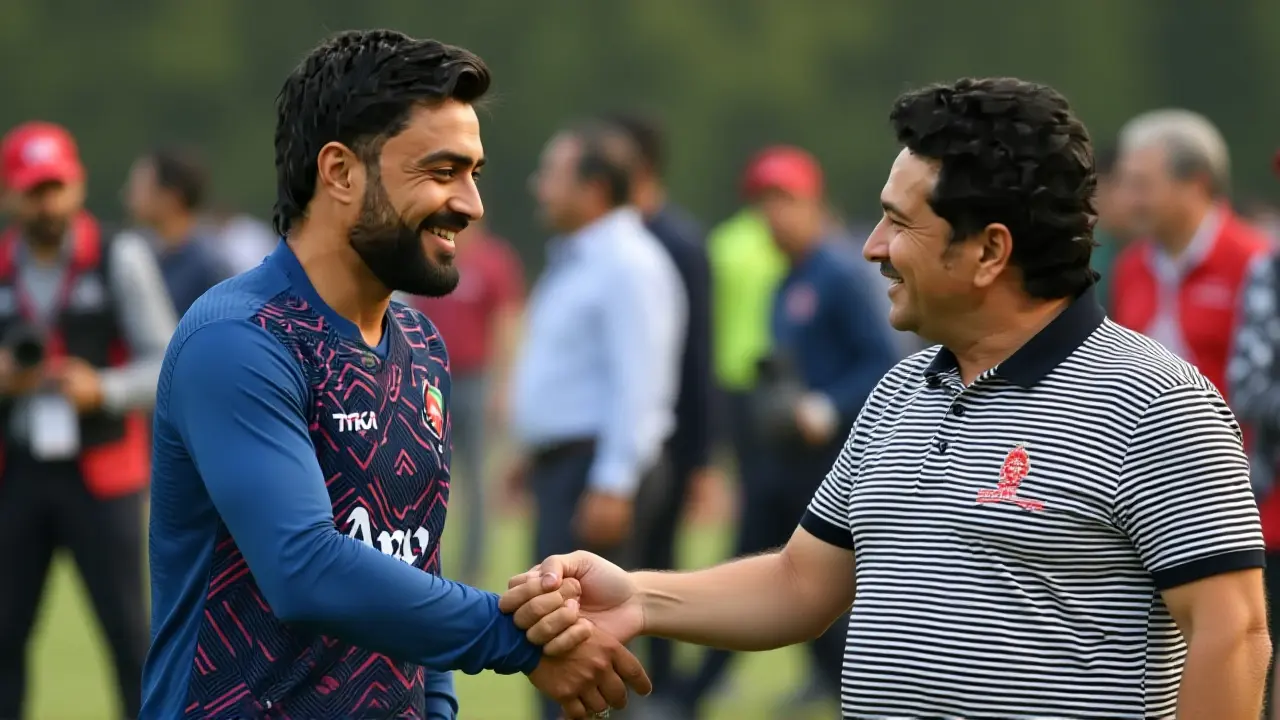
On March 9, 2025, the world watched as India chased down New Zealand’s total to win by four wickets. It wasn’t just a win; it was redemption. After years of near-misses and heartbreaks, India finally lifted the Champions Trophy again. Rohit Sharma’s leadership was pivotal, guiding the team through pressure moments with calm authority.
New Zealand, however, should be proud. They reached the final without dropping a single match in the knockout phase. Their resilience was commendable, even if the silver medal stings.
Rachin Ravindra was named Player of the Series, a well-deserved honor for his all-round contributions. His batting and bowling kept New Zealand competitive throughout, especially in crucial moments.
Why This Matters Beyond the Scoreboard
This tournament highlighted more than just cricket. It underscored the ongoing geopolitical challenges in sports. The fact that India-Pakistan matches had to be held in a third country reflects deeper issues that extend beyond the boundary ropes. Yet, the sport endured, and fans got their entertainment.
For Pakistan, hosting the event was a boost for domestic infrastructure and global visibility. For the UAE, it reinforced their role as a neutral hub for international cricket. And for India, it was validation of their dominance in limited-overs cricket.
Looking ahead, the ICC may need to reconsider how such tournaments are structured when political sensitivities arise. But for now, let’s celebrate the cricket. The skill, the strategy, the sheer athleticism—it’s what keeps us coming back.
Frequently Asked Questions
Who won the 2025 ICC Champions Trophy?
India won the 2025 ICC Champions Trophy, defeating New Zealand by four wickets in the final held in Dubai on March 9, 2025. This marked India’s third title in the competition, following previous wins in 2002 and 2013.
Where were the matches played during the tournament?
Matches were jointly hosted by Pakistan and the UAE. Group stage games involving India were played at the Dubai International Cricket Stadium. Other matches were held at National Stadium in Karachi, Gaddafi Stadium in Lahore, and Rawalpindi Cricket Stadium in Pakistan.
Who was named Player of the Series?
Rachin Ravindra from New Zealand was awarded the Player of the Series honor for his outstanding all-round performances throughout the tournament, including key contributions in the semi-finals and final.
Why did India play their matches in Dubai instead of Pakistan?
Due to longstanding political tensions, India declined to play matches in Pakistan. As a result, all of India’s fixtures, including the group stage match against Pakistan and the knockout games, were relocated to the United Arab Emirates.
How many teams participated in the 2025 Champions Trophy?
Eight national teams participated: Pakistan, India, New Zealand, Bangladesh, South Africa, Australia, Afghanistan, and England. They were divided into two groups of four, playing a round-robin format before the knockout stages.
Mike Gill
June 15, 2026 AT 00:01man india finally won it again :D rohit is a legend for sure, the way he handled that pressure in the final was just insane. new zealand played good too but we deserved this one after 12 years of waiting. so happy right now!!
Shreyanshu Singh
June 16, 2026 AT 05:43honestly its not even about the win its about the politics ruining everything. why do we have to play in dubai? its embarrassing that our government cant sort out basic cricket diplomacy. the match was fine i guess but the whole setup felt cheap and forced. people are celebrating like they achieved world peace instead of just winning a tournament hosted by neutral parties because we refuse to travel.
Sohni Bhatt
June 18, 2026 AT 03:51It is truly fascinating how the masses revel in such superficial victories while ignoring the glaring structural deficiencies of modern international sports governance, which has devolved into a circus of political posturing rather than a celebration of athletic meritocracy. The fact that India’s matches were relegated to the UAE due to geopolitical squabbles underscores a profound failure of diplomatic imagination on both sides, reducing what should be a unifying cultural exchange to a fragmented spectacle that benefits only the commercial interests of neutral hosts who profit from our inability to coexist. One must question whether the joy derived from lifting a trophy outweighs the moral compromise of participating in a system that institutionalizes division, for surely there is a higher purpose to sport that transcends the petty nationalism currently driving these narratives, yet here we are, applauding mediocrity disguised as triumph because it aligns with our tribal identities.
Prashant Sharma
June 18, 2026 AT 10:20The narrative surrounding Rohit Sharma's leadership is somewhat overstated when one considers the collective effort required to dismantle New Zealand's bowling attack, which was arguably more disciplined than their previous campaigns. It is interesting to note that the split hosting arrangement, while logistically cumbersome, inadvertently highlighted the resilience of Indian players who perform under artificial constraints rather than home comforts. The victory is significant, yes, but let us not pretend it was an easy stroll; the psychological weight of playing in Dubai against a Kiwi side that had not lost a knockout match is substantial. We should appreciate the tactical nuances rather than just screaming about national pride.
Navya Anish
June 20, 2026 AT 08:55Don't get excited yet! This is just another hollow victory. The team is full of aging veterans who can't bowl properly anymore. Look at the death overs in the semi-final, pure luck saved them. And don't even get me started on the selection policy, it's a mess. I bet they will choke in the next World Cup too. Typical Indian cricket drama, all hype no substance. 😒
Subramanian Raman
June 20, 2026 AT 23:32I wonder if the silence in Dubai was louder than the cheers in Karachi? It makes you think about how geography shapes emotion. Cricket is supposed to bring people together, yet here we are divided by borders and politics. But still, seeing Ravindra get Player of the Series shows that talent doesn't care about where you play. Maybe this win will help heal some old wounds? 🤔
Jay Patel
June 22, 2026 AT 11:12🏆🇮🇳 Finally! After 12 years of suffering, we are back on top! Rohit Garu is a god among men. The way he smashed those boundaries in the final was poetry in motion. New Zealand tried hard but they knew they were up against the best. This is what dominance looks like. Let's go India! 💪🔥 #ChampionsTrophy #IndiaWins
Suresh Kumar
June 23, 2026 AT 07:19The concept of victory is transient. Today we celebrate, tomorrow we forget. The trophy will gather dust in a museum while the players move on to T20 leagues. What remains is the memory of the chase. The tension. The breath held in the throat. It is a fleeting moment of clarity in a chaotic world. Perhaps that is enough. Or perhaps it is nothing at all. The desert heat fades. The crowd disperses. Only the scorecard remains.
Anoop Sherlekar
June 25, 2026 AT 02:07YES!!! LETS GOOOO!!! 🎉🎉🎉 ROHIT IS THE BEST CAPTAIN EVER!!! INDIA ZINDABAD!!! SO PROUD OF OUR BOYS!!! THEY FIGHTED SO HARD!!! NEW ZEALAND WAS GOOD BUT WE WERE BETTER!!! THIS WIN MEANS EVERYTHING TO US!!! CELEBRATE BIG TIME!!! 🚀🚀🚀
Pranav Gopal
June 25, 2026 AT 08:02It is important to recognize the effort put in by every player on the field regardless of the outcome. New Zealand showed great spirit and Rachin Ravindra deserves all the praise for his consistent performance. For India, this is a milestone that reflects years of hard work and dedication. Let us respect the game and the opponents who made it challenging. Sportsmanship is key.