

 Apr, 26 2026
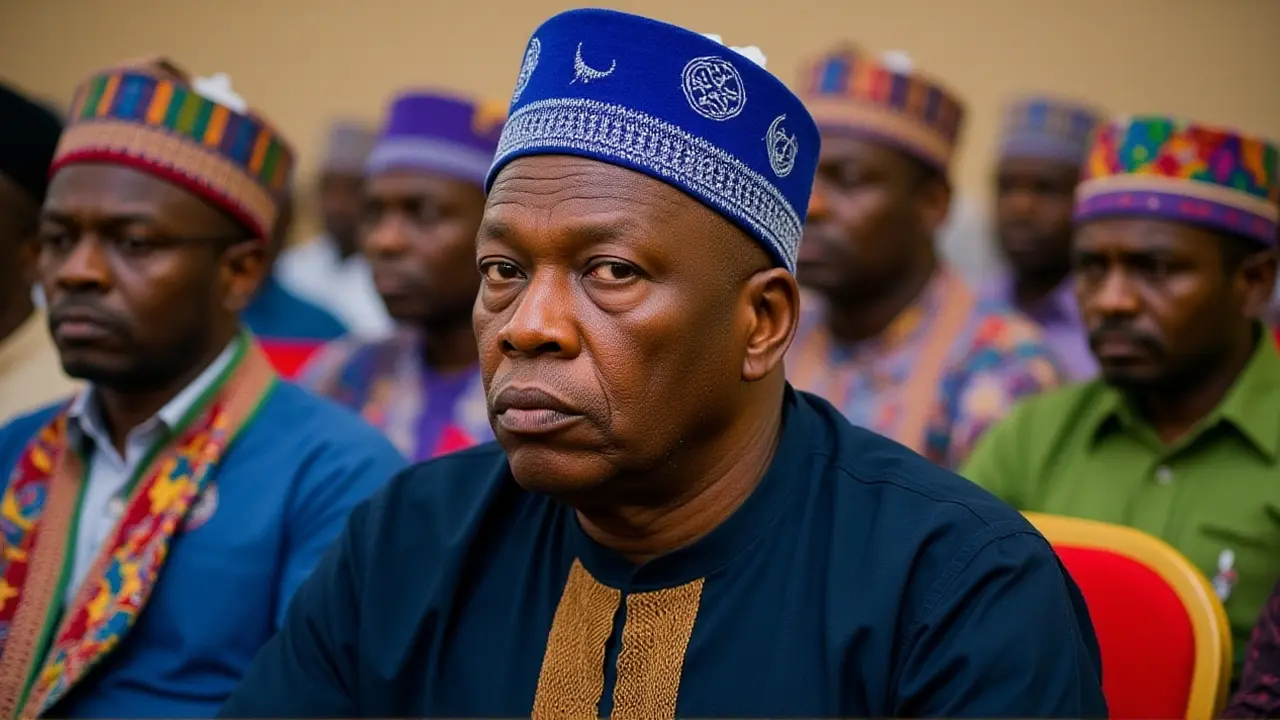
The fight against urban poverty in Northern Nigeria just took a new turn as Abdullahi Ganduje, the former Governor of Kano State, has called for a massive shift toward special needs investment to practically eliminate street begging. The proposal, shared during a series of policy discussions in Nigeria, suggests that simply giving handouts to the displaced is a failing strategy that only sustains a cycle of dependency. Instead, Ganduje argues that the state must invest in vocational infrastructure tailored to the specific disabilities and limitations of those on the streets.
Here's the thing: street begging in Kano isn't just a social nuisance; it's a complex economic symptom. For years, the city's intersections have been crowded with individuals who have fallen through the cracks of the social safety net. While previous administrations tried temporary shelters or sporadic cash transfers, the persistence of the problem suggests those methods didn't hit the root cause. The twist is that Ganduje isn't calling for more charity, but for a targeted investment model that treats the impoverished as potential economic assets rather than liabilities.
- Primary Goal: Transition street beggars from dependency to self-sufficiency.
- Mechanism: Special needs investment focusing on adaptive vocational training.
- Target Area: High-density begging zones across Kano State.
- Core Philosophy: Moving from "alms-giving" to "skill-acquisition."
The Mechanics of Special Needs Investment
When we talk about special needs investment, we aren't just talking about wheelchairs or hearing aids. Ganduje's vision involves creating a specialized ecosystem where people with physical or mental disabilities can enter the workforce through modified roles. For instance, a person with limited mobility might be trained in digital services or specialized craftwork that doesn't require standing, provided the state invests in the necessary assistive technology. Turns out, this is far more sustainable than the traditional approach of providing a few bags of rice during religious holidays.
The proposal suggests that the Kano State Government should partner with private entities to build "Skill Hubs." These would be centers where the displaced are first screened for their specific needs and then placed in a curriculum designed for their capabilities. This isn't a one-size-fits-all school; it's a tailored approach to rehabilitation. Surprisingly, few policymakers have previously looked at street begging through the lens of "special needs" rather than just "poverty." (It's a distinction that changes everything about how you spend the budget).
Connecting Economic Revival to Social Welfare
This push for social investment doesn't happen in a vacuum. It mirrors Ganduje's broader economic strategy for the region. Not long ago, during a workshop organized by the Nigeria Deposit Insurance Corporation (NDIC), he emphasized the importance of Public-Private Partnerships (PPP) to revive the cotton industry. The logic is the same: you don't fix a broken system with government grants alone; you fix it by creating a framework where private capital is incentivized to produce social value.
By applying this PPP model to special needs, the government could offer tax breaks to companies that hire rehabilitated individuals from the streets. This creates a pipeline: the state provides the training, and the private sector provides the employment. It's a cycle that moves a person from the sidewalk to a payroll, which is the only permanent way to stop the begging cycle. However, the details on how to identify and register every street beggar without causing panic remain unclear.
Competing Perspectives on Poverty Alleviation
Not everyone is convinced that a vocational approach is the magic bullet. Some social workers argue that street begging is often tied to deep-seated systemic issues like familial abandonment and lack of mental health facilities. They suggest that before a person can be "invested in" for a job, they need intensive psychological support and stable housing. Without a home, a vocational certificate is just a piece of paper.
On the other hand, economic hawks argue that the state cannot afford a permanent welfare system. They see Ganduje's approach as the only realistic path forward in a country where the national debt is climbing and social budgets are shrinking. From their perspective, turning a "beggar" into a "taxpayer" is the only mathematically sound way to handle urban poverty.
Broader Implications for Northern Nigeria
If this model succeeds in Kano, it could serve as a blueprint for other states in the North, where street begging is a visible part of the urban landscape. The ripple effect would be significant. Reducing the number of people on the streets improves city security, reduces the risk of child trafficking (which often hides behind the guise of begging), and boosts the overall dignity of the urban environment.
Moreover, it signals a shift in how Nigerian leaders view the disabled. For too long, disability was seen through a lens of pity. Moving toward an "investment" mindset acknowledges that people with special needs have agency and value. It's a move from a charity-based society to a rights-based society.
What Happens Next?
The next step depends on whether these advocacies translate into legislative action. For this to work, there needs to be a specific budget line for "Special Needs Vocationalism" and a clear legal framework to protect these workers from discrimination. Watch for any upcoming bills in the Kano State House of Assembly that mention social welfare reform or PPPs in the health and education sectors.
The success of this initiative will likely be measured not by how many people are "off the streets," but by how many are actually employed. If the transition rate remains low, the policy will be seen as just another political talking point. But if it works, it could change the face of Kano's streets forever.
Frequently Asked Questions
What exactly is "special needs investment" in this context?
It refers to spending government and private funds on adaptive tools, specialized vocational training, and modified workspaces. Instead of giving cash to beggars, the money is spent on training them for jobs that suit their specific physical or mental capabilities, such as digital skills for those with mobility issues.
How does this differ from traditional poverty programs?
Traditional programs often rely on "alms-giving" or temporary relief, which provides short-term survival but doesn't stop the cycle of begging. Ganduje's proposed approach is a long-term economic strategy aimed at human capital development, transforming the recipient from a dependent into a productive worker.
Who is responsible for implementing these changes?
The primary responsibility lies with the Kano State Government, but the model heavily relies on Public-Private Partnerships (PPP). This means private companies would be expected to provide the jobs and some of the funding in exchange for government incentives like tax breaks.
Why is street begging such a major issue in Kano?
Kano is a major commercial hub, attracting thousands of people. A combination of economic instability, lack of inclusive education for the disabled, and deep-rooted cultural patterns of giving alms has created a large population of street beggars, some of whom are victims of organized exploitation.
Will this eliminate begging entirely?
While it is unlikely to eliminate every instance of begging, it aims to eliminate the "structural" need to beg. By providing an alternative path to income for those with special needs, the number of people forced onto the streets by disability and poverty should drop significantly over time.
Gary Clement
April 27, 2026 AT 18:28vocational training for disabilities is a game changer for urban development and this approach is actually backed by a lot of data from other developing nations
moving from handouts to skills is the only way to break the cycle
nikolai kingsley
April 29, 2026 AT 04:28absolutly ridculous that it took this long to realize charity is a joke
people just love feelin good about themselfs by giving a coin without actually fixxing the problem
Aaron X
April 29, 2026 AT 18:00The systemic paradigm shift from a philanthropic model to a human capital investment framework is intellectually stimulating. We are essentially discussing the transmutation of marginalized socioeconomic strata into productive economic agents through the lens of adaptive capacity. This necessitates a rigorous analysis of the intersectionality between physical limitation and marketability. The ontological shift here is treating the individual not as a void to be filled by alms, but as a latent asset requiring specific technological catalysts. It is a move toward a more utilitarian social contract where dignity is derived from agency rather than dependency. The structural implementation will likely face headwinds from entrenched bureaucratic inertia. However, the teleological goal of transforming a liability into a taxpayer is the only sustainable trajectory for a developing state. We must consider the macroeconomic externalities of such a transition. If the PPP model is scaled, it could redefine the social safety net across the Global South. It's about optimizing the utility of every citizen regardless of their biological constraints. This is a classic example of shifting from a distributive justice model to a productive justice model.
Antony Bachtiar
April 29, 2026 AT 21:22lol yeah right as if the govt actually cares
they'll just steal the money meant for the "skill hubs" and buy another private jet for some cousin
Mason Interactive
May 1, 2026 AT 12:10Honestly this sounds like a pretty solid plan for Kano. It's cool to see them moving away from just giving out rice and actually thinking about long-term jobs.
Alex Green international
May 1, 2026 AT 21:34It is heartening to see such a compassionate approach toward those in need
the focus on dignity and self reliance is truly commendable
Dianna Knight
May 3, 2026 AT 01:32I love the focus on assistive tech here! 🌟 Using a multi-stakeholder approach to create inclusive ecosystems is exactly what's needed to optimize human capital for people with special needs 🦾✨
Beth Elwood
May 4, 2026 AT 20:39Digital services training is the way to go 💻. It bypasses so many physical barriers and lets people actually compete in the modern economy 🚀🔥
Josh Raine
May 6, 2026 AT 09:17Why do we always assume a job is the only way to find dignity? 🙄 Some people might just need a decent home and a therapist before they can even think about a "skill hub"! This whole "investment" talk just sounds like a way to treat humans like stocks in a portfolio. It's aggressive and cold. Give them a roof first! 😡
Shelley Brinkley
May 6, 2026 AT 16:54plz stop pretending this isnt just a pr stunt
the math doesnt add up and the execusion will b a disaster as usual
saravanan saran
May 7, 2026 AT 16:43It is interesting to observe the shift from pity to empowerment. Such a transition in mindset can slowly change the entire social fabric of a city.
SAURABH PATHAK
May 9, 2026 AT 08:49I've seen similar schemes in other cities and they only work if the monitoring is strict. If they just let the private companies take the tax breaks without actually hiring, it's a scam.
Arun Prasath
May 10, 2026 AT 07:19The integration of Public-Private Partnerships is a highly effective strategy for sustainable development. I believe this framework will provide the necessary scalability for the project.
Priya Menon
May 11, 2026 AT 02:11While I agree with the economic logic, we must ensure that the most vulnerable are not pushed aside if they cannot be "monetized" through vocational training. We cannot leave the severely disabled behind just because they aren't "economic assets."
Nikita Roy
May 11, 2026 AT 06:45this is going to be amazing for the community
Jivika Mahal
May 11, 2026 AT 10:29I really hope this works out for everyone!! its so imporatnt to give these folks a chance to show what they can do in a supportve environment ❤️