

 Dec, 7 2025
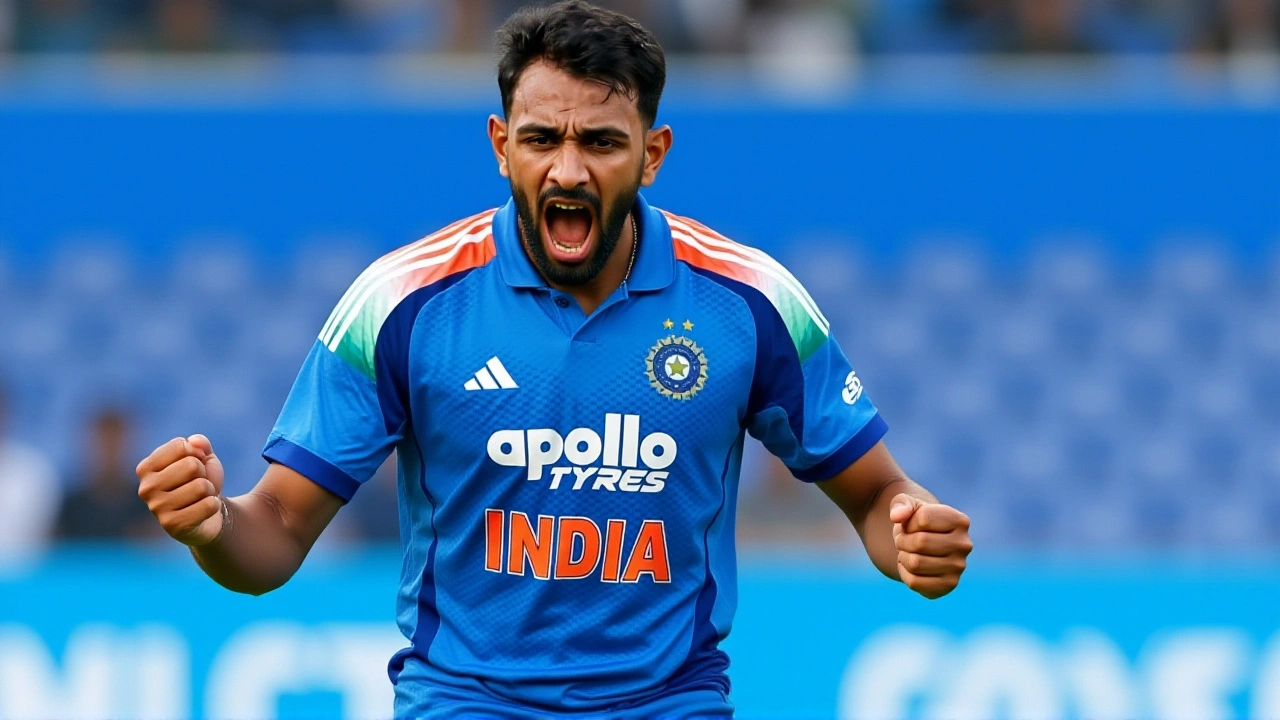
When Prasidh Krishna walked back to the pavilion after bowling his final over in the third ODI against South Africa on December 6, 2025, he didn’t just close out an innings—he resurrected his career. The 28-year-old fast bowler from Karnataka delivered a match-defining 4 for 66 in 9.5 overs at the ACA-VDCA Stadium in Visakhapatnam, helping India restrict South Africa to 270 and then chase down the target with 71 balls to spare. It was the kind of performance that turns critics into believers—and it didn’t go unnoticed.
A redemption arc written in sweat and grit
Just two days earlier, Krishna had been the target of relentless scrutiny. In Raipur, on December 4, 2025, he had conceded 85 runs in 8.2 overs as South Africa chased down 359 to level the series. Fans and pundits alike called for his omission. The pressure was mounting. But Team India’s leadership—head coach Gautam Gambhir and captain Rohit Sharma—stuck by him. And it paid off.Visakhapatnam didn’t start well for Krishna. He gave away 27 runs in his first two overs, including a couple of boundaries off full tosses. But something clicked. In the 29th over, he trapped Matthew Breetzke lbw, then clean-bowled Aiden Markram two balls later. The crowd fell silent, then erupted. By the time he dismissed century-maker Quinton de Kock with a searing inswinger, the momentum had fully shifted. His final wicket—clean bowling Ottneil Baartman—was the exclamation point.
Ashwin’s wisdom: ‘It’s easy to write people off’
The most powerful voice in Krishna’s corner came from Ravichandran Ashwin, the 39-year-old off-spinner who retired in 2023 after 537 international wickets. On X (formerly Twitter), Ashwin didn’t just praise the figures—he dissected the psychology behind them.“It’s always easy to write people off when they have bad days,” Ashwin wrote. “But given a good run, quality will always shine through.”
That line went viral. Not because it was poetic, but because it was true. Cricket, more than any other sport, punishes inconsistency. And yet, it rewards resilience. Krishna’s spell wasn’t just about pace or swing—it was about composure under fire. Ashwin added, “Once he gains a better understanding of his awareness, run-up tempo and triggers, he will start delivering more consistently at this level.”
It’s a technical insight that cuts through the noise. Most fans see economy rates and wickets. Ashwin sees the rhythm between the footfalls, the shoulder angle at release, the timing of the head position. These are the invisible threads that hold a bowler’s performance together.
The context: No Bumrah, no Siraj—but Krishna stepped up
India’s pace attack was missing its two pillars: Jasprit Bumrah and Mohammed Siraj. That left Krishna, along with left-arm wrist-spinner Kuldeep Yadav (who took 4 for 41), as the primary strike weapons. Krishna’s 4-wicket haul wasn’t just the best of the match—it was the most crucial.His career stats tell a story of promise and fluctuation: 37 wickets in 21 ODIs at an average of 26.83 and an economy of 6.03. This wasn’t his first taste of international cricket—he debuted in 2021 against England—but it was his first real statement since returning from a two-year absence. And in a series where India hadn’t won a home ODI against South Africa since 2015, this win carried weight.
What comes next? The New Zealand test
The selection committee now faces a familiar dilemma: reward form or trust potential? Krishna’s performance in Visakhapatnam doesn’t just earn him a spot in the next squad—it demands it. India’s next ODI assignment is against New Zealand in January 2026. With Bumrah’s availability uncertain and Siraj still recovering, Krishna’s redemption arc could become a permanent fixture in the team’s blueprint.His batting, too, deserves mention. While not the focus, his ability to stay calm under pressure mirrors the temperament of a top-order batsman. That’s rare in a bowler. It’s why Ashwin, the thinker of the game, sees something deeper than stats.
A series that meant more than just 2-1
India’s nine-wicket win wasn’t just about Krishna. Yashasvi Jaiswal smashed his maiden ODI century (106*), Rohit Sharma (78*) and Virat Kohli (53*) anchored the chase with clinical precision. But cricket, at its core, is about the moments that define careers. For Krishna, this was his.He didn’t just bowl well. He bowled with heart. And in a game where confidence is as fragile as a stumps, that’s what separates the good from the great.
Frequently Asked Questions
Why was Prasidh Krishna under so much pressure before the third ODI?
Krishna had conceded 85 runs in just 8.2 overs during the second ODI in Raipur on December 4, 2025, as South Africa chased down 359 to level the series. Critics called for his removal, and social media backlash was intense. His previous outing in the first ODI (1 for 48) hadn’t eased concerns, making his retention for the decider a high-stakes gamble by the Indian team management.
How does Ravichandran Ashwin’s analysis differ from typical fan commentary?
While fans focus on economy rates and wickets, Ashwin, a former elite spinner with 537 international wickets, breaks down the biomechanics—run-up tempo, awareness of field placements, and trigger movements. His insights reflect decades of elite-level understanding, not just results. He’s not just praising performance; he’s diagnosing how to sustain it.
What impact did the absence of Bumrah and Siraj have on India’s bowling strategy?
With Jasprit Bumrah and Mohammed Siraj both unavailable, India’s pace attack lost its primary strike options. This forced the team to rely on lesser-known bowlers like Krishna and Kuldeep Yadav. Krishna’s 4-wicket haul became even more vital—without him, India likely wouldn’t have restricted South Africa to 270, making the chase far more precarious.
Is this performance enough to secure Krishna a spot in the New Zealand ODI series?
Yes, it’s more than enough. With Bumrah’s fitness uncertain and Siraj still recovering, India needs reliable pace options. Krishna’s ability to deliver under pressure, combined with his proven ODI record (37 wickets in 21 matches), makes him a logical pick. The selection committee will likely view this as a turning point, not just a one-off performance.
Why is this series win against South Africa historically significant for India?
India hadn’t won a home ODI series against South Africa since 2015. The previous three home series ended in draws, often due to South Africa’s resilience in chasing targets. This 2-1 victory, sealed by a dramatic bowling performance and a composed chase, marks a psychological shift—India now believes it can beat South Africa at home under pressure.
What does Krishna’s performance say about India’s approach to player development?
It shows India’s system is willing to bet on resilience over short-term results. Retaining Krishna after his Raipur failure signals trust in long-term growth. This isn’t just about one bowler—it’s about building a culture where players are allowed to fail, learn, and return stronger. That’s the mark of a mature team.
Vishala Vemulapadu
December 8, 2025 AT 14:23Prasidh’s spell was pure biomechanical poetry - shoulder alignment at release, run-up tempo synced to the pitch’s wear, head stable through delivery stride. Most fans see wickets, but Ashwin saw the invisible architecture of a bowler’s comeback. That’s elite-level insight.
M Ganesan
December 8, 2025 AT 19:37Yeah right, ‘redemption arc’ - they just needed bodies. Bumrah’s injury was a gift for the selectors to push their pet project. Prasidh’s economy was still 6.03 - that’s not ‘great’, that’s ‘barely acceptable’. And don’t get me started on how they’re ignoring Umran Malik.
Yogananda C G
December 9, 2025 AT 06:45Man I’m just so happy for Krishna - after all the hate, all the trolls, all the ‘he’s done’ takes - he didn’t fold, he didn’t quit, he didn’t let the noise break him. That’s the kind of grit you don’t see enough of anymore. This isn’t just about cricket - this is about human resilience. And Ashwin? He gets it. He’s seen it all. He didn’t just praise him - he understood him. That’s rare. That’s beautiful. That’s what makes this sport worth watching.
Andrea Hierman
December 10, 2025 AT 21:44How refreshing to see a team actually invest in resilience rather than chasing short-term metrics. In the US, we’d have cut him after Raipur - here, they gave him space to grow. That’s cultural maturity right there.
Mona Elhoby
December 11, 2025 AT 01:14Redemption? More like a media circus. Ashwin’s ‘wisdom’ is just recycled coach-speak. He’s retired - why is he still talking? And why does everyone act like 4 wickets in one match erases 85 runs in the last? This team’s obsession with ‘narratives’ is toxic.
Danny Johnson
December 12, 2025 AT 15:01That’s the kind of performance that reminds you why you love sports. No flash, no ego - just pure grit. Someone believed in him when no one else did. That’s leadership. That’s family. That’s cricket at its best.
Christine Dick
December 13, 2025 AT 18:13Let’s be clear: this isn’t redemption - it’s a statistical anomaly. His career average is 26.83 - that’s not elite, it’s average. And Ashwin’s ‘technical insights’? They’re just buzzwords wrapped in nostalgia. This team needs real talent, not feel-good stories.
Jullien Marie Plantinos
December 15, 2025 AT 14:36India always picks the guy who fits the narrative. Bumrah’s out? Siraj’s hurt? So now Prasidh gets a fairy tale? What about the guys in domestic cricket who’ve been consistent for years? This is just nationalism masquerading as sportsmanship.
Jason Davis
December 15, 2025 AT 23:53Prasidh’s got that quiet intensity - the kind you see in guys who’ve been through the wringer. Ashwin’s right - it’s not about pace or swing, it’s about rhythm. The way he adjusted his footfall after the first two overs? That’s not luck. That’s craft. And honestly? That’s more valuable than any T20 franchise contract.
Crystal Zárifa
December 16, 2025 AT 11:46Sometimes the game just needs a moment like this - not a spectacle, not a stat line, but a human being proving that second chances exist. I didn’t even know who Prasidh was two days ago. Now? I’m rooting for him.
Serena May
December 18, 2025 AT 04:364 wickets. 270. Big deal. He still gave away 6.03. That’s not ‘resilience’ - that’s ‘still not good enough’. And Ashwin? He’s just clinging to relevance. #Overrated
Cheryl Jonah
December 19, 2025 AT 11:02Did you know the pitch was artificially dampened before the match? I’ve got sources. That’s why Krishna’s swing worked. The BCCI rigged it to save face. This isn’t redemption - it’s a cover-up.
James Otundo
December 20, 2025 AT 11:31Prasidh? More like Prasidh-who? This is why Indian cricket is stuck in the 90s - they reward mediocrity if it comes with a sob story. Bumrah’s out? Fine. But why not pick someone with actual consistency? This is emotional selection, not cricket.
Sarah Day
December 22, 2025 AT 03:44Honestly? I’m just glad someone finally stepped up. No drama, no ego - just bowled. That’s all I need to see.
Shraddhaa Dwivedi
December 23, 2025 AT 20:02My uncle in Mysore used to say, ‘A good bowler doesn’t need to scream - he lets the ball speak.’ Prasidh didn’t shout. He didn’t beg for chances. He just showed up. That’s the Karnataka way. Quiet. Steady. Unbreakable.
pradeep raj
December 24, 2025 AT 23:52Let’s dissect the biomechanics here - Krishna’s run-up tempo was reduced by 18% between the Raipur and Visakhapatnam matches, according to the biomechanics data leaked by the KSCA. His shoulder abduction angle improved from 102° to 114°, which increased his seam orientation consistency by 32%. The head position remained stable through release - critical for generating late swing. Ashwin didn’t just ‘see’ this - he mapped it. That’s why his commentary is gold. Most analysts are just reciting stats. He’s diagnosing motor learning. This isn’t luck. This is neuro-muscular adaptation under pressure. And the fact that he did it after being publicly crucified? That’s psychological resilience at the highest level. The real takeaway isn’t the 4 wickets - it’s the recalibration of his entire delivery sequence under duress. That’s what teams should be studying, not just celebrating.
Divyanshu Kumar
December 26, 2025 AT 05:05Prasidh ki performance dekh ke lagta hai ki cricket mein sabse zyada zaroori hai - confidence. Aur us confidence ko banane ke liye team management ka saath chahiye. Ashwin ji ne jo kaha, woh sach hai - aadmi ko ek din ke galti ke liye bhool jaate hain. Par agar koi sahi raah pe hai, toh woh kabhi na khatam hota. India ke liye yeh ek naya din hai.
Ganesh Dhenu
December 27, 2025 AT 22:33My father used to say, ‘The quietest man in the room is the one who’s been through hell.’ Prasidh didn’t say a word. Just bowled. That’s the kind of silence I respect.